


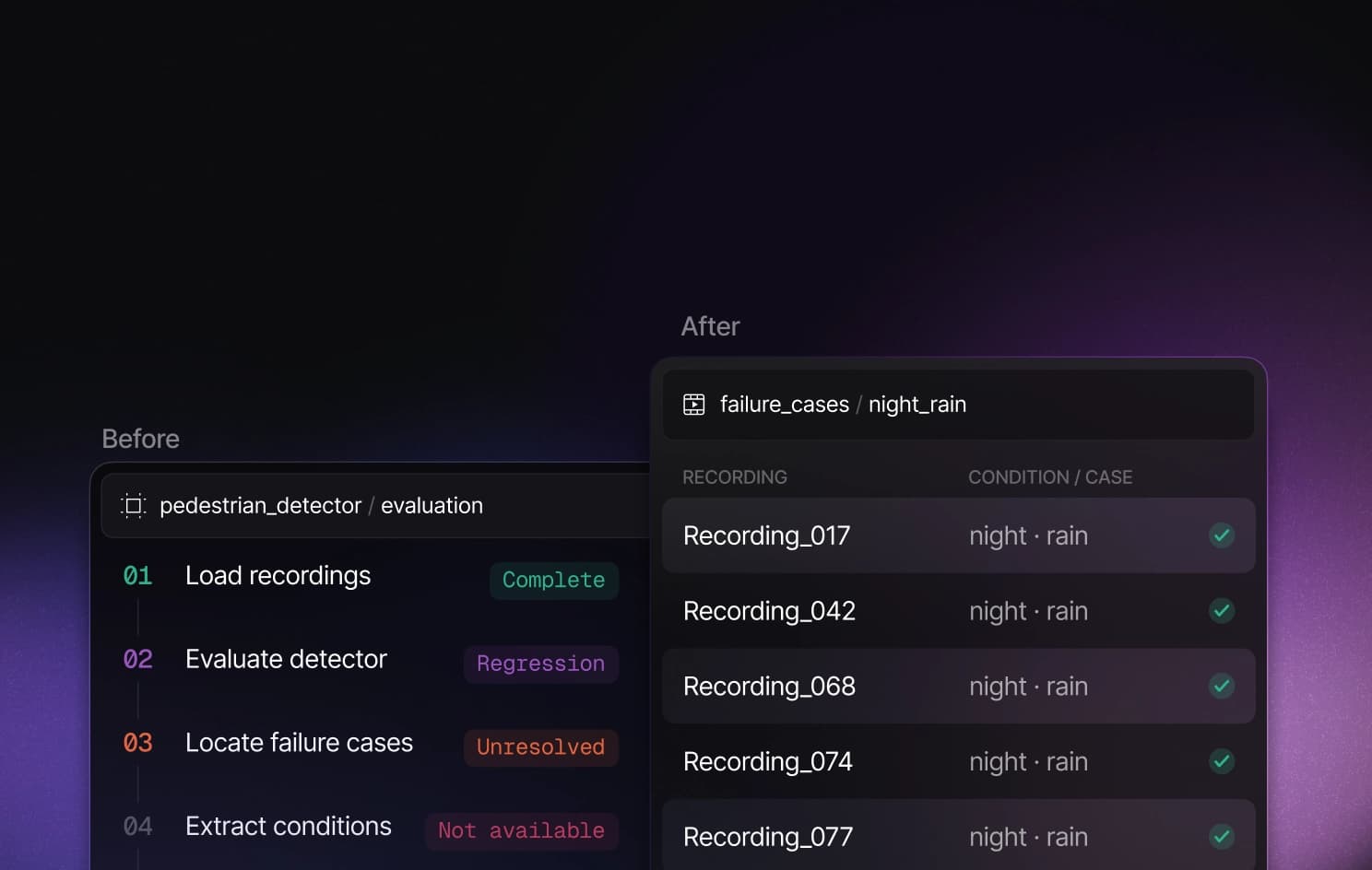
Failure investigation
From a regression to the exact recordings and failure cases behind it, then uncover the shared signals that explain what went wrong.
Built for Physical AI
Claude Code, Codex, or Cursor: search video/
on millions of files across hundreds of machines — data stays put.
Trusted by startups and Fortune 500 companies


One agent, not one stage
Our pedestrian detector regressed in night rain. Find the failures, figure out what they have in common, and build a dataset we can evaluate the fix against.
Finding the failures reads existing recordings to locate model errors.
Finding common patterns extracts new signals shared by the failures.
Building the eval set saves selected examples as a new dataset.
Evaluating the fix hands the dataset to training to test improvements.
Proof
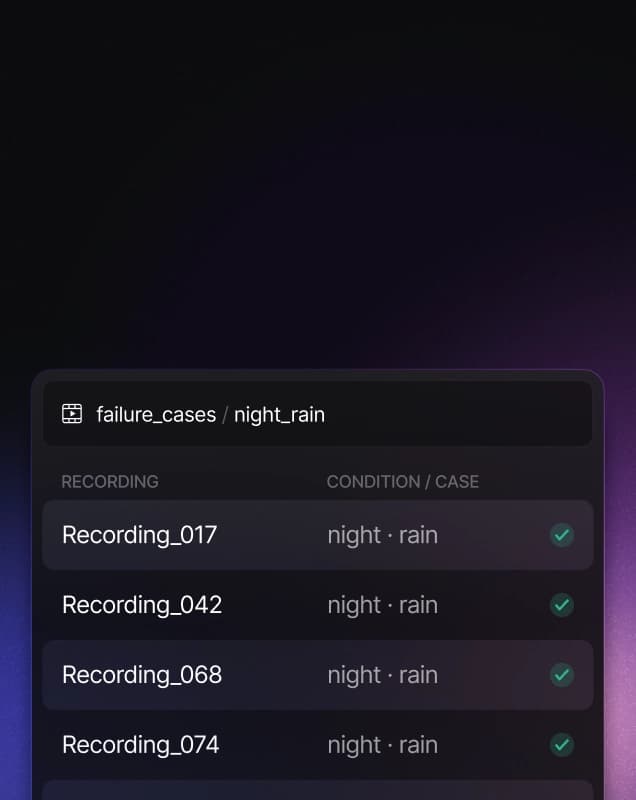
From a regression to the exact recordings and failure cases behind it, then uncover the shared signals that explain what went wrong.
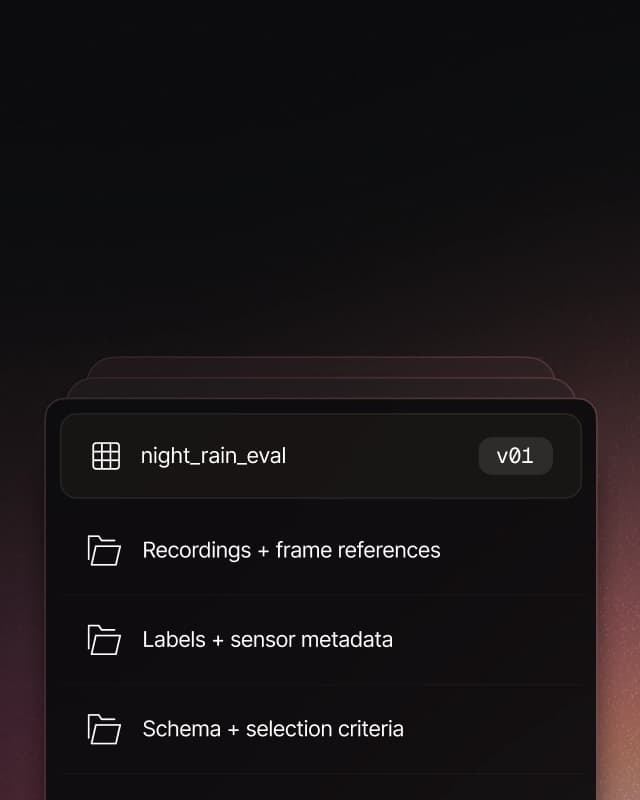
From scattered files, recordings, labels, and metadata to a reproducible, versioned dataset ready for evaluation or model training.

From a local Python prototype to the same workload running efficiently across millions of files and hundreds of machines.
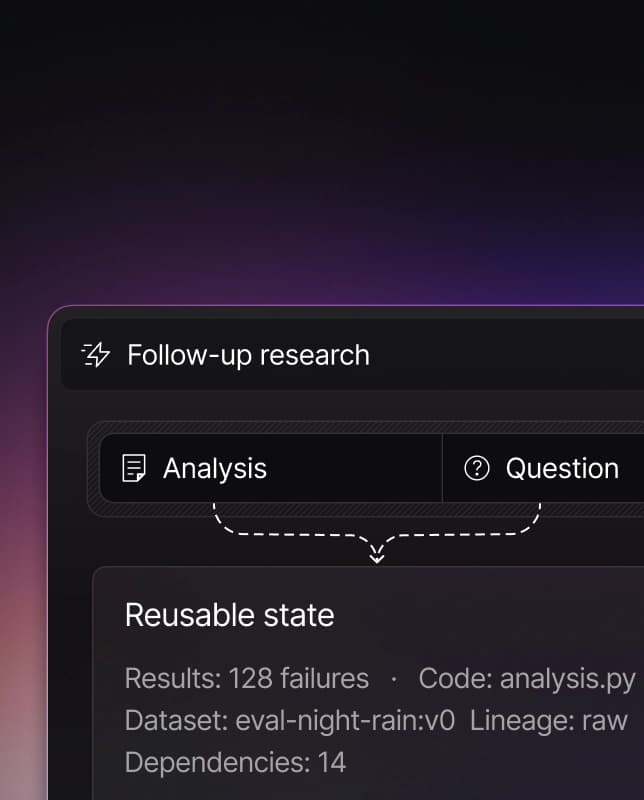
From an expensive first analysis to new questions that reuse existing results, code, datasets, and state instead of starting from scratch.
DataChain added real value to our workflows - versioned datasets, automated ETL, and MLOps, all in Python. If you need a data management layer on top of cloud storage, give it a try.
Nikhilesh Saggere
Lead Engineer, Alps Alpine Europe
What surprised me was how easily researchers adopted DataChain - data tools are usually hard for non-engineers. What surprised me more was when hardware and QA started asking for access too.
Sharon Kohen
Principal Data Engineering, brain.space MobiClocks
We realized we were solving a problem we shouldn't be solving. With DataChain, what used to require data engineers is now handled seamlessly by researchers - and the whole team moved to the next level.
Yoni Svechinsky
Director of Research, brain.space
The Physical AI Data Runtime
Data Memory: Datasets, code, lineage, and dependencies. Execution: Run Python over millions of files on hundreds of machines.
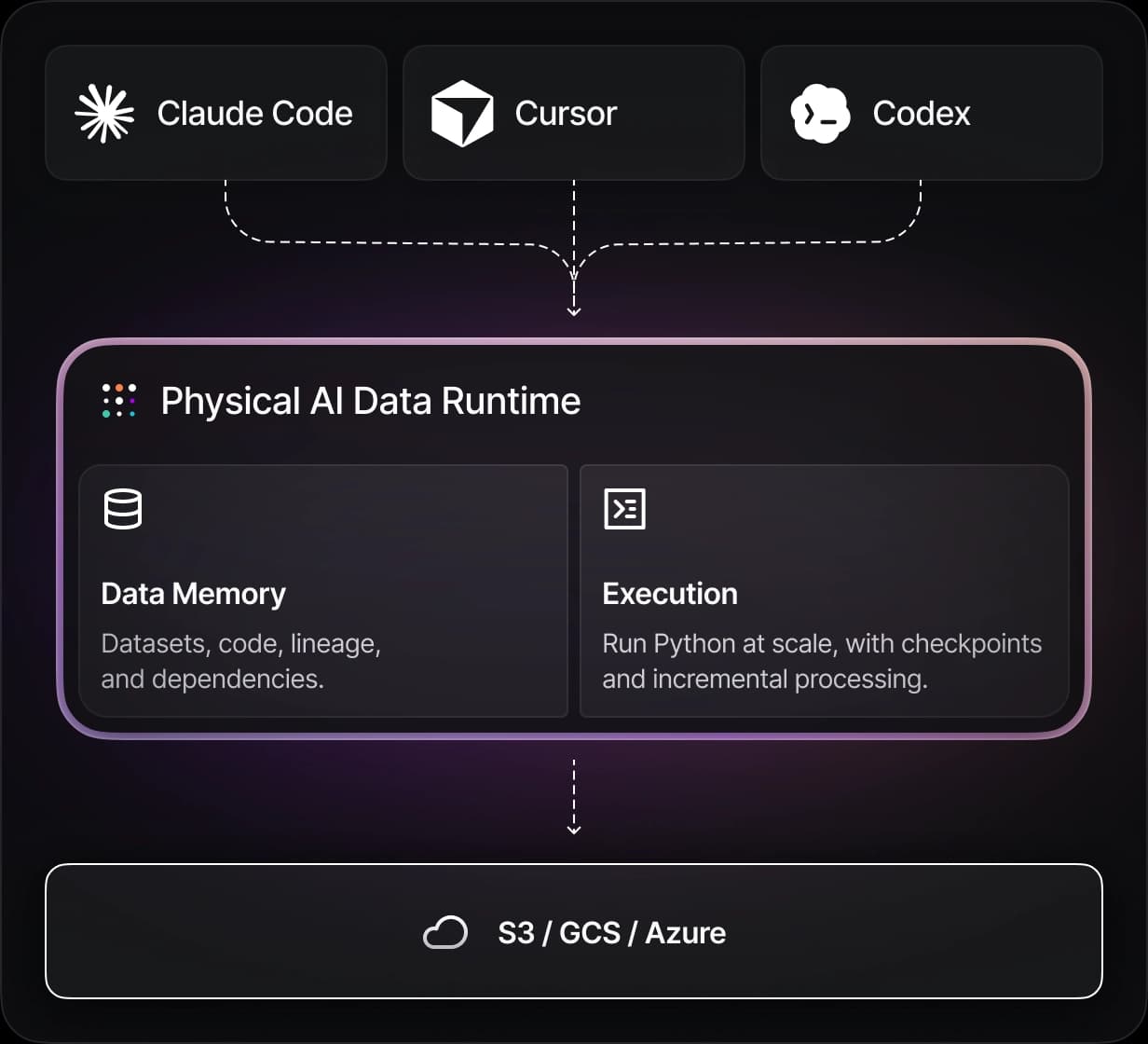
Every run creates new state the next task can reuse.
Bring Your Own Cloud
The compute runs next to your buckets. The state data warehouse lives there too. Nothing is copied out, and nothing is read across the internet.
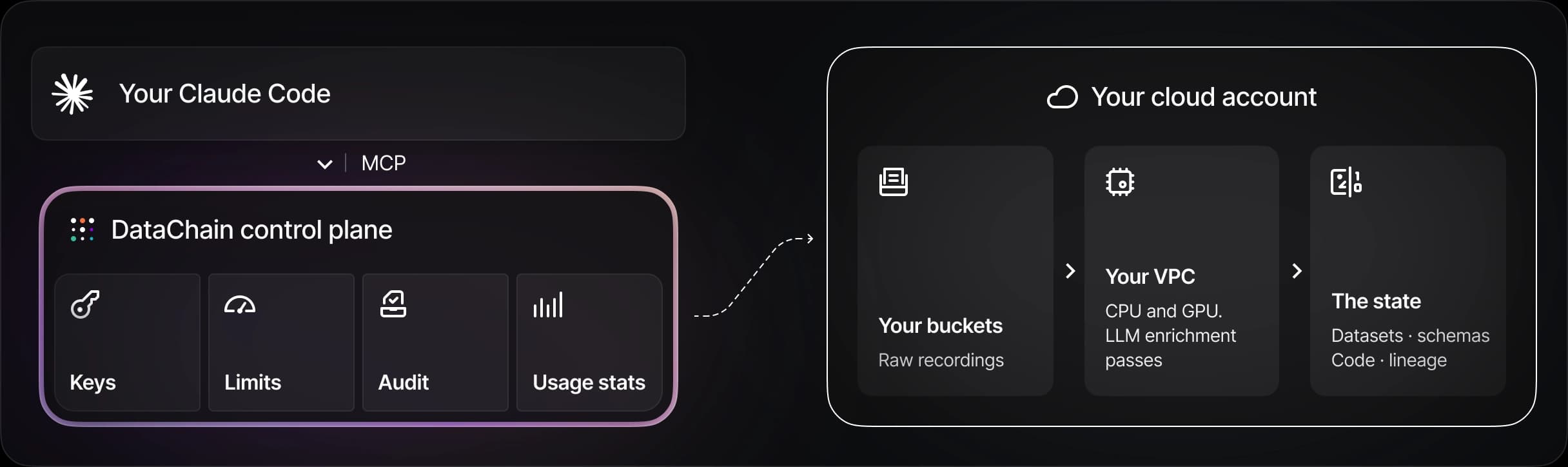
SOC 2 Type II compliant. We hold the keys, the limits, the audit and usage stats. Everything else is yours, including the state your team builds.
Run it from Claude Code, Codex, or Cursor - on the data already in your cloud.
Try DataChain


